
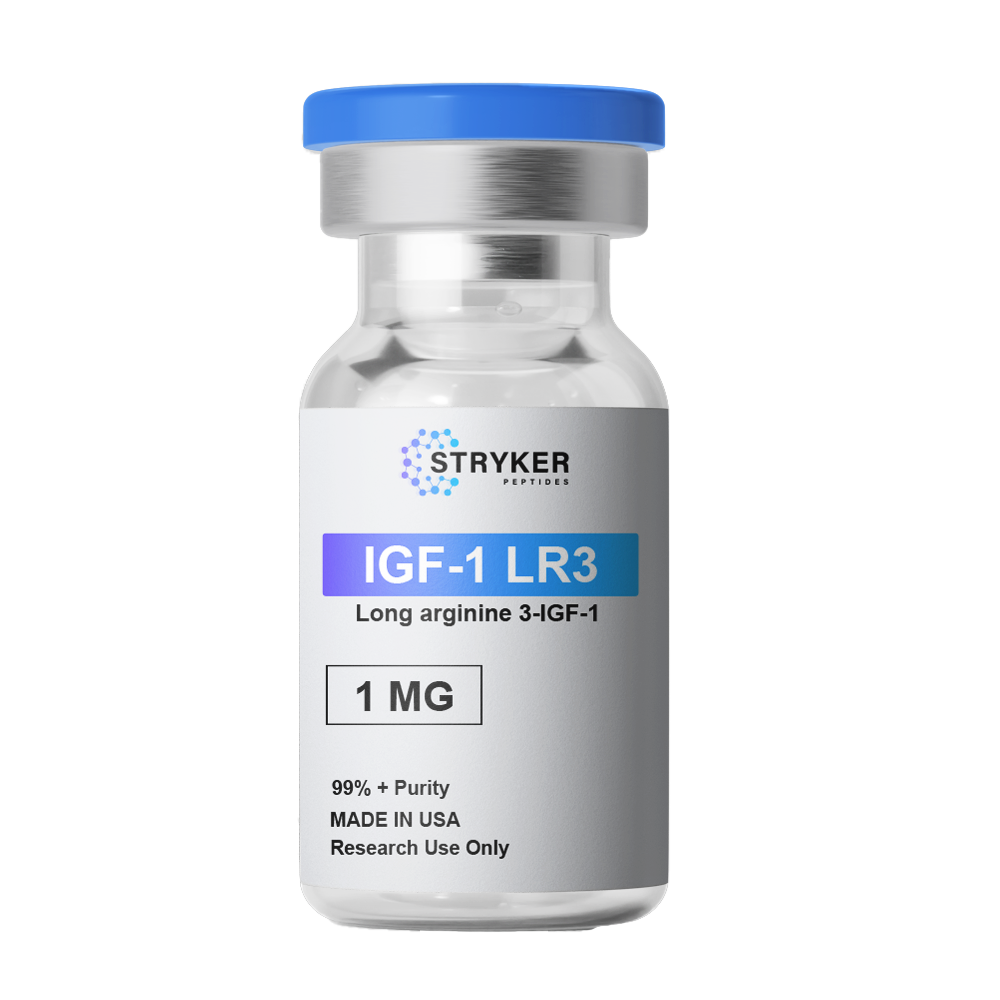

What is IGF‑1 LR3?
IGF‑1 LR3 (Insulin‑like Growth Factor‑1 Long Arg3) is a recombinant analogue of human IGF‑1, modified to enhance metabolic stability and receptor potency while reducing binding to IGF‑binding proteins (IGFBPs) [4]. The peptide contains the entire native 70-residue IGF‑1 sequence, with two main alterations: a glutamic acid to arginine substitution at position 3 (Arg3), and a 13-amino-acid N-terminal extension (making it “long-R3”) for sustained activity in research settings
Chemical Structure of IGF‑1 LR3
IGF‑1 LR3 is an 83-amino-acid polypeptide with the full sequence: MFPAMPLSSLFVNGPRTLCGAELVDALQFVCGDRGFYFNKPTGYGSSSRRAPQTGIVDECCFRSCDLRRLEMYCAPLKPAKSA
Key structural features: Arg instead of Glu at position 3, and a 13-amino-acid extension at the N-terminus [1][5]. Its formula is C₄₀₀H₆₂₅N₁₁₁O₁₁₅S₉, and the molecular weight is approximately 9,117 Da
What Are the Effects of IGF‑1 LR3?
- Enhanced Anabolic and Mitogenic Activity: IGF‑1 LR3 demonstrates approximately 3× greater receptor potency than native IGF‑1 and sustains signaling through PI3K/Akt and MAPK pathways due to lower IGFBP binding and extended half-life (~20–30 hours).
- Cell Proliferation and Protein Synthesis: Promotes cell division, nitrogen retention, protein synthesis, and lean tissue mass accumulation in animal models.
- Tissue Regenerative Research: Used in muscle, cartilage, nerve, liver, and skin regeneration models, where it enhances nutrient uptake and supports anabolic repair processes.
- Metabolic Modulation: Facilitates glucose and amino acid uptake while improving insulin sensitivity under metabolic stress conditions.
- Atherosclerotic Plaque Stability: Helps stabilize atherosclerotic plaques by improving vascular smooth muscle phenotype and reducing plaque vulnerability.

